Periods : 18th century

  • Clock — Clockmaker: Jean-André Lepaute · 1770–80

    This clock in The Metropolitan Museum of Art is dated 1770–80. The catalogue records Bronze, gilt bronze, enamel and identifies the object as 41.41. Its maker attribution is Clockmaker: Jean-André Lepaute. Use the record as a documented point of comparison: the dates and attributions below belong to this collection object, and should not be transferred to a similar-looking timepiece without further evidence.
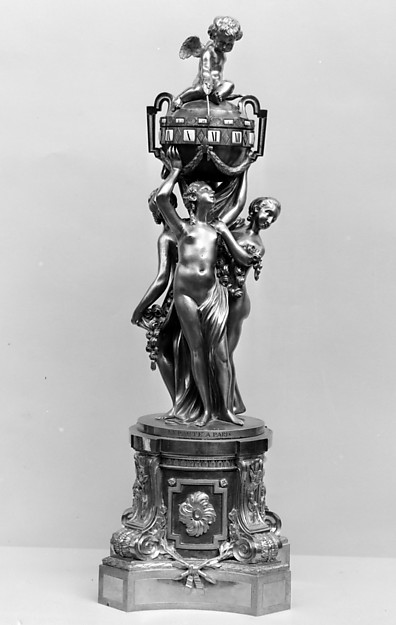
    Clock, 1770–80, Met 41.41
    Clock · 1770–80 · The Metropolitan Museum of Art, 41.41. Public domain. View the source record.

    Catalogue facts

    Object Clock
    Date 1770–80
    Maker / contributors Clockmaker: Jean-André Lepaute
    Materials Bronze, gilt bronze, enamel
    Dimensions Height: 20 1/2 in. (52.1 cm)
    Culture / place Not specified in this record
    Collection number 41.41
    Acquisition credit Rogers Fund, 1941

    What to notice in this record

    The date and maker information are separate catalogue fields. Record both, together with the museum identifier, so a later reader can trace the attribution back to this particular object rather than to a general style.

    The material description includes gilding. Keep the distinction between a surface finish and the material beneath it. A gold-coloured appearance is not a substitute for the source’s specific material description.

    Use it as a comparison

    1. Start with the complete form and the recorded dimensions, then compare individual features.
    2. Transcribe visible names and numbers on your own object exactly, recording their locations.
    3. Separate similarities from differences and mark information that cannot be checked in a photograph.
    4. Follow the museum link for additional views and any revisions before relying on the comparison.

    Questions this entry can—and cannot—answer

    Which object is being described?

    The Met collection object 41.41, catalogued as Clock. The image and facts on this page concern that object.

    Does this identify a similar watch or clock?

    No. It supplies a documented comparison. A proposed identification needs evidence from the object being examined.

    Is a current value or working condition established?

    Neither a current valuation nor a mechanical assessment is supplied by the metadata used for this entry. These points remain unassessed here.

    What should I read next?

    The antique-clock guide explains the broader method. For examination or service, consult an appropriate horology professional.

    Source and image credit

    The Metropolitan Museum of Art — 41.41. Metadata consulted 15 October 2026. Rogers Fund, 1941. Public-domain status recorded by The Met. Catalogue facts are separated above from our editorial comparison prompts. Read the editorial method.
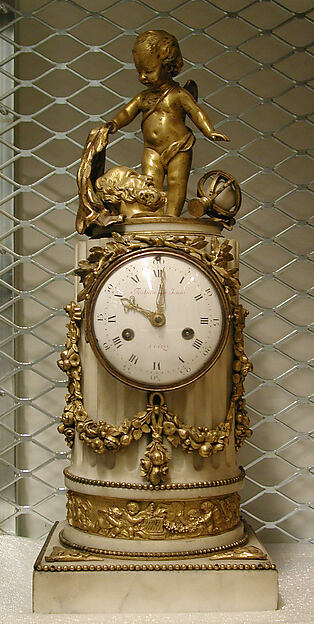
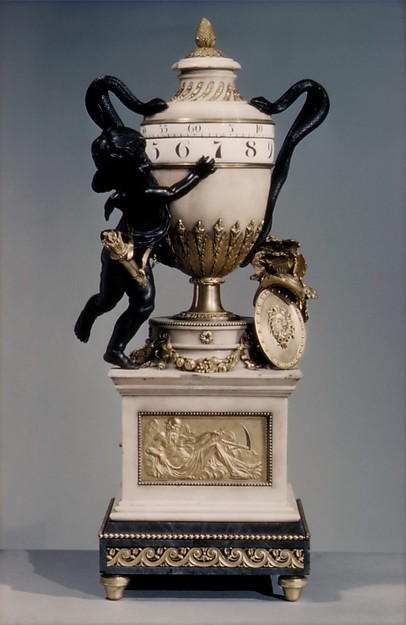
  • Clock — Met 30.58.14 · ca. 1770–90

    This clock in The Metropolitan Museum of Art is dated ca. 1770–90. The catalogue records Gilt bronze and marble and identifies the object as 30.58.14. Its maker attribution is Clockmaker: Festau Le Jeune (probably Simon-François). Use the record as a documented point of comparison: the dates and attributions below belong to this collection object, and should not be transferred to a similar-looking timepiece without further evidence.

    Clock, ca. 1770–90, Met 30.58.14
    Clock · ca. 1770–90 · The Metropolitan Museum of Art, 30.58.14. Public domain. View the source record.

    Catalogue facts

    Object Clock
    Date ca. 1770–90
    Maker / contributors Clockmaker: Festau Le Jeune (probably Simon-François)
    Materials Gilt bronze and marble
    Dimensions 16 1/4 × 6 1/2 in. (41.3 × 16.5 cm)
    Culture / place Not specified in this record
    Collection number 30.58.14
    Acquisition credit Bequest of Edward C. Post, 1915

    What to notice in this record

    The date is qualified rather than exact. Keep that qualification in your research notes: it signals the level of precision supplied by the museum. Do not turn the beginning or end of a range into a documented manufacture year.

    The material description includes gilding. Keep the distinction between a surface finish and the material beneath it. A gold-coloured appearance is not a substitute for the source’s specific material description.

    Use it as a comparison

    1. Start with the complete form and the recorded dimensions, then compare individual features.
    2. Transcribe visible names and numbers on your own object exactly, recording their locations.
    3. Separate similarities from differences and mark information that cannot be checked in a photograph.
    4. Follow the museum link for additional views and any revisions before relying on the comparison.

    Questions this entry can—and cannot—answer

    Which object is being described?

    The Met collection object 30.58.14, catalogued as Clock. The image and facts on this page concern that object.

    Does this identify a similar watch or clock?

    No. It supplies a documented comparison. A proposed identification needs evidence from the object being examined.

    Is a current value or working condition established?

    Neither a current valuation nor a mechanical assessment is supplied by the metadata used for this entry. These points remain unassessed here.

    What should I read next?

    The antique-clock guide explains the broader method. For examination or service, consult an appropriate horology professional.

    Source and image credit

    The Metropolitan Museum of Art — 30.58.14. Metadata consulted 15 October 2026. Bequest of Edward C. Post, 1915. Public-domain status recorded by The Met. Catalogue facts are separated above from our editorial comparison prompts. Read the editorial method.
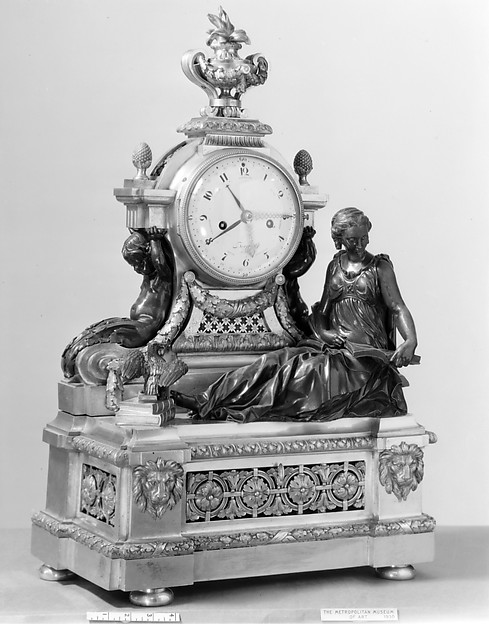
  • Clock — Met 29.180.4 · ca. 1775–80

    This clock in The Metropolitan Museum of Art is dated ca. 1775–80. The catalogue records Marble, bronze and gilt-bronze; chapter rings of white enamel; movement of brass and steel and identifies the object as 29.180.4. Its maker attribution is Clockmaker: workshop of Jean-Baptiste Lepaute. Use the record as a documented point of comparison: the dates and attributions below belong to this collection object, and should not be transferred to a similar-looking timepiece without further evidence.

    Clock, ca. 1775–80, Met 29.180.4
    Clock · ca. 1775–80 · The Metropolitan Museum of Art, 29.180.4. Public domain. View the source record.

    Catalogue facts

    Object Clock
    Date ca. 1775–80
    Maker / contributors Clockmaker: workshop of Jean-Baptiste Lepaute; and Pierre Henry, called Henry Lepaute; bronzes possibly by Pierre Philippe Thomire; and Louis Simon Boizot
    Materials Marble, bronze and gilt-bronze; chapter rings of white enamel; movement of brass and steel
    Dimensions H. 28-3/8 x W. 10 x D. 10 in. (72.1 x 25.4 x 25.4 cm)
    Culture / place Not specified in this record
    Collection number 29.180.4
    Acquisition credit Bequest of Ogden Mills, 1929

    What to notice in this record

    The date is qualified rather than exact. Keep that qualification in your research notes: it signals the level of precision supplied by the museum. Do not turn the beginning or end of a range into a documented manufacture year.

    The material description includes gilding. Keep the distinction between a surface finish and the material beneath it. A gold-coloured appearance is not a substitute for the source’s specific material description.

    Use it as a comparison

    1. Start with the complete form and the recorded dimensions, then compare individual features.
    2. Transcribe visible names and numbers on your own object exactly, recording their locations.
    3. Separate similarities from differences and mark information that cannot be checked in a photograph.
    4. Follow the museum link for additional views and any revisions before relying on the comparison.

    Questions this entry can—and cannot—answer

    Which object is being described?

    The Met collection object 29.180.4, catalogued as Clock. The image and facts on this page concern that object.

    Does this identify a similar watch or clock?

    No. It supplies a documented comparison. A proposed identification needs evidence from the object being examined.

    Is a current value or working condition established?

    Neither a current valuation nor a mechanical assessment is supplied by the metadata used for this entry. These points remain unassessed here.

    What should I read next?

    The antique-clock guide explains the broader method. For examination or service, consult an appropriate horology professional.

    Source and image credit

    The Metropolitan Museum of Art — 29.180.4. Metadata consulted 15 October 2026. Bequest of Ogden Mills, 1929. Public-domain status recorded by The Met. Catalogue facts are separated above from our editorial comparison prompts. Read the editorial method.
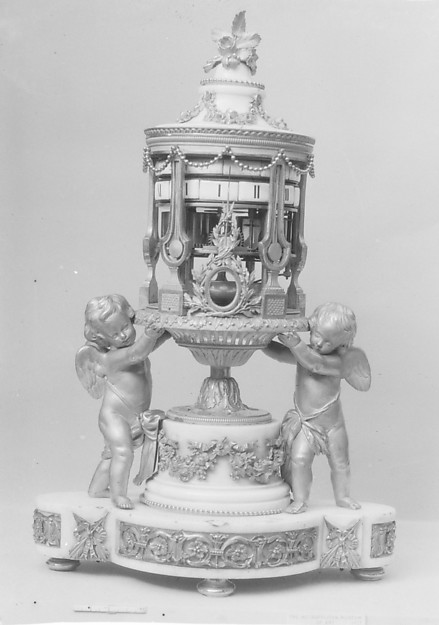
  • Clock — Met 29.180.3 · ca. 1765

    This clock in The Metropolitan Museum of Art is dated ca. 1765. The catalogue records Bronze and gilt bronze and identifies the object as 29.180.3. Its maker attribution is Clockmaker: Joseph Charles Paul Bertrand. Use the record as a documented point of comparison: the dates and attributions below belong to this collection object, and should not be transferred to a similar-looking timepiece without further evidence.

    Clock, ca. 1765, Met 29.180.3
    Clock · ca. 1765 · The Metropolitan Museum of Art, 29.180.3. Public domain. View the source record.

    Catalogue facts

    Object Clock
    Date ca. 1765
    Maker / contributors Clockmaker: Joseph Charles Paul Bertrand; Case maker: Jean-Joseph de Saint Germain
    Materials Bronze and gilt bronze
    Dimensions Overall: 29 1/4 × 17 1/2 × 9 3/4 in. (74.3 × 44.5 × 24.8 cm)
    Culture / place Not specified in this record
    Collection number 29.180.3
    Acquisition credit Bequest of Ogden Mills, 1929

    What to notice in this record

    The date is qualified rather than exact. Keep that qualification in your research notes: it signals the level of precision supplied by the museum. Do not turn the beginning or end of a range into a documented manufacture year.

    The material description includes gilding. Keep the distinction between a surface finish and the material beneath it. A gold-coloured appearance is not a substitute for the source’s specific material description.

    Use it as a comparison

    1. Start with the complete form and the recorded dimensions, then compare individual features.
    2. Transcribe visible names and numbers on your own object exactly, recording their locations.
    3. Separate similarities from differences and mark information that cannot be checked in a photograph.
    4. Follow the museum link for additional views and any revisions before relying on the comparison.

    Questions this entry can—and cannot—answer

    Which object is being described?

    The Met collection object 29.180.3, catalogued as Clock. The image and facts on this page concern that object.

    Does this identify a similar watch or clock?

    No. It supplies a documented comparison. A proposed identification needs evidence from the object being examined.

    Is a current value or working condition established?

    Neither a current valuation nor a mechanical assessment is supplied by the metadata used for this entry. These points remain unassessed here.

    What should I read next?

    The antique-clock guide explains the broader method. For examination or service, consult an appropriate horology professional.

    Source and image credit

    The Metropolitan Museum of Art — 29.180.3. Metadata consulted 15 October 2026. Bequest of Ogden Mills, 1929. Public-domain status recorded by The Met. Catalogue facts are separated above from our editorial comparison prompts. Read the editorial method.
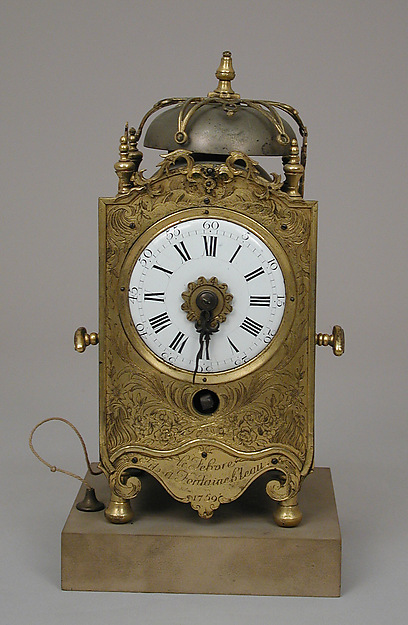
  • Clock — Clockmaker: Le Febvre, Fils · 18th century

    This clock in The Metropolitan Museum of Art is dated 18th century. The catalogue records Brass gilt and identifies the object as 29.52.17. Its maker attribution is Clockmaker: Le Febvre, Fils. Use the record as a documented point of comparison: the dates and attributions below belong to this collection object, and should not be transferred to a similar-looking timepiece without further evidence.

    Clock, 18th century, Met 29.52.17
    Clock · 18th century · The Metropolitan Museum of Art, 29.52.17. Public domain. View the source record.

    Catalogue facts

    Object Clock
    Date 18th century
    Maker / contributors Clockmaker: Le Febvre, Fils
    Materials Brass gilt
    Dimensions Overall: 8 × 4 3/4 × 3 1/2 in. (20.3 × 12.1 × 8.9 cm)
    Culture / place Not specified in this record
    Collection number 29.52.17
    Acquisition credit Gift of Mrs. Simon Guggenheim, 1929

    What to notice in this record

    The catalogue dates the object at century level. This provides a period for comparison, but does not establish a specific year. Any narrower dating for a similar object would need its own supporting evidence.

    The material description includes gilding. Keep the distinction between a surface finish and the material beneath it. A gold-coloured appearance is not a substitute for the source’s specific material description.

    Use it as a comparison

    1. Start with the complete form and the recorded dimensions, then compare individual features.
    2. Transcribe visible names and numbers on your own object exactly, recording their locations.
    3. Separate similarities from differences and mark information that cannot be checked in a photograph.
    4. Follow the museum link for additional views and any revisions before relying on the comparison.

    Questions this entry can—and cannot—answer

    Which object is being described?

    The Met collection object 29.52.17, catalogued as Clock. The image and facts on this page concern that object.

    Does this identify a similar watch or clock?

    No. It supplies a documented comparison. A proposed identification needs evidence from the object being examined.

    Is a current value or working condition established?

    Neither a current valuation nor a mechanical assessment is supplied by the metadata used for this entry. These points remain unassessed here.

    What should I read next?

    The antique-clock guide explains the broader method. For examination or service, consult an appropriate horology professional.

    Source and image credit

    The Metropolitan Museum of Art — 29.52.17. Metadata consulted 15 October 2026. Gift of Mrs. Simon Guggenheim, 1929. Public-domain status recorded by The Met. Catalogue facts are separated above from our editorial comparison prompts. Read the editorial method.
  • Clock — Maker not recorded · ca. 1785–90

    This clock in The Metropolitan Museum of Art is dated ca. 1785–90. The catalogue records Gilt bronze, marble and identifies the object as 26.260.37. No maker is named in the available catalogue metadata. Use the record as a documented point of comparison: the dates and attributions below belong to this collection object, and should not be transferred to a similar-looking timepiece without further evidence.

    Clock, ca. 1785–90, Met 26.260.37
    Clock · ca. 1785–90 · The Metropolitan Museum of Art, 26.260.37. Public domain. View the source record.

    Catalogue facts

    Object Clock
    Date ca. 1785–90
    Maker / contributors Not specified in the available record
    Materials Gilt bronze, marble
    Dimensions 16 7/8 × 10 7/8 in. (42.9 × 27.6 cm)
    Culture / place Not specified in this record
    Collection number 26.260.37
    Acquisition credit Bequest of Annie C. Kane, 1926

    What to notice in this record

    The date is qualified rather than exact. Keep that qualification in your research notes: it signals the level of precision supplied by the museum. Do not turn the beginning or end of a range into a documented manufacture year.

    The material description includes gilding. Keep the distinction between a surface finish and the material beneath it. A gold-coloured appearance is not a substitute for the source’s specific material description.

    Use it as a comparison

    1. Start with the complete form and the recorded dimensions, then compare individual features.
    2. Transcribe visible names and numbers on your own object exactly, recording their locations.
    3. Separate similarities from differences and mark information that cannot be checked in a photograph.
    4. Follow the museum link for additional views and any revisions before relying on the comparison.

    Questions this entry can—and cannot—answer

    Which object is being described?

    The Met collection object 26.260.37, catalogued as Clock. The image and facts on this page concern that object.

    Does this identify a similar watch or clock?

    No. It supplies a documented comparison. A proposed identification needs evidence from the object being examined.

    Is a current value or working condition established?

    Neither a current valuation nor a mechanical assessment is supplied by the metadata used for this entry. These points remain unassessed here.

    What should I read next?

    The antique-clock guide explains the broader method. For examination or service, consult an appropriate horology professional.

    Source and image credit

    The Metropolitan Museum of Art — 26.260.37. Metadata consulted 15 October 2026. Bequest of Annie C. Kane, 1926. Public-domain status recorded by The Met. Catalogue facts are separated above from our editorial comparison prompts. Read the editorial method.
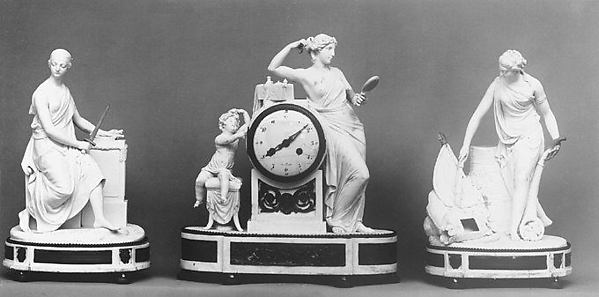
  • Clock — Rue de Bondy · 18th century

    This clock in The Metropolitan Museum of Art is dated 18th century. The catalogue records Hard-paste biscuit porcelain, gilt bronze and identifies the object as 12.188.3a. Its maker attribution is Rue de Bondy. Use the record as a documented point of comparison: the dates and attributions below belong to this collection object, and should not be transferred to a similar-looking timepiece without further evidence.

    Clock, 18th century, Met 12.188.3a
    Clock · 18th century · The Metropolitan Museum of Art, 12.188.3a. Public domain. View the source record.

    Catalogue facts

    Object Clock
    Date 18th century
    Maker / contributors Rue de Bondy
    Materials Hard-paste biscuit porcelain, gilt bronze
    Dimensions Height: 14 3/8 in. (36.5 cm)
    Culture / place Not specified in this record
    Collection number 12.188.3a
    Acquisition credit Bequest of Horatio C. Kretschmar, 1912

    What to notice in this record

    The catalogue dates the object at century level. This provides a period for comparison, but does not establish a specific year. Any narrower dating for a similar object would need its own supporting evidence.

    The material description includes gilding. Keep the distinction between a surface finish and the material beneath it. A gold-coloured appearance is not a substitute for the source’s specific material description.

    Use it as a comparison

    1. Start with the complete form and the recorded dimensions, then compare individual features.
    2. Transcribe visible names and numbers on your own object exactly, recording their locations.
    3. Separate similarities from differences and mark information that cannot be checked in a photograph.
    4. Follow the museum link for additional views and any revisions before relying on the comparison.

    Questions this entry can—and cannot—answer

    Which object is being described?

    The Met collection object 12.188.3a, catalogued as Clock. The image and facts on this page concern that object.

    Does this identify a similar watch or clock?

    No. It supplies a documented comparison. A proposed identification needs evidence from the object being examined.

    Is a current value or working condition established?

    Neither a current valuation nor a mechanical assessment is supplied by the metadata used for this entry. These points remain unassessed here.

    What should I read next?

    The antique-clock guide explains the broader method. For examination or service, consult an appropriate horology professional.

    Source and image credit

    The Metropolitan Museum of Art — 12.188.3a. Metadata consulted 15 October 2026. Bequest of Horatio C. Kretschmar, 1912. Public-domain status recorded by The Met. Catalogue facts are separated above from our editorial comparison prompts. Read the editorial method.

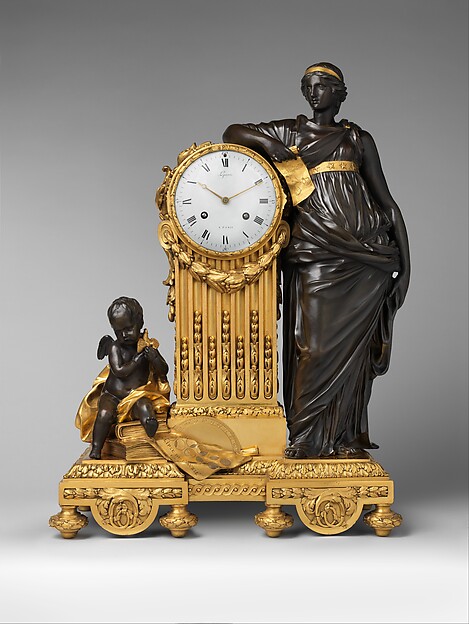
  • Mantel clock — Clockmaker: Jean-André Lepaute · ca. 1764–70

    This mantel clock in The Metropolitan Museum of Art is dated ca. 1764–70. The catalogue records Case: patinated bronze and gilded bronze; Dial: white enamel; Movement: brass and steel and identifies the object as 29.180.2. Its maker attribution is Clockmaker: Jean-André Lepaute. Use the record as a documented point of comparison: the dates and attributions below belong to this collection object, and should not be transferred to a similar-looking timepiece without further evidence.

    Mantel clock, ca. 1764–70, Met 29.180.2
    Mantel clock ("Pendule Uranie") · ca. 1764–70 · The Metropolitan Museum of Art, 29.180.2. Public domain. View the source record.

    Catalogue facts

    Object Mantel clock ("Pendule Uranie")
    Date ca. 1764–70
    Maker / contributors Clockmaker: Jean-André Lepaute; Clockmaker: Jean-Baptiste Lepaute
    Materials Case: patinated bronze and gilded bronze; Dial: white enamel; Movement: brass and steel
    Dimensions Overall (confirmed): 28 × 20 1/2 × 10 1/2 in., 110 lb. (71.1 × 52.1 × 26.7 cm, 49.9 kg)
    Culture / place Not specified in this record
    Collection number 29.180.2
    Acquisition credit Bequest of Ogden Mills, 1929

    What to notice in this record

    The date is qualified rather than exact. Keep that qualification in your research notes: it signals the level of precision supplied by the museum. Do not turn the beginning or end of a range into a documented manufacture year.

    The material description includes gilding. Keep the distinction between a surface finish and the material beneath it. A gold-coloured appearance is not a substitute for the source’s specific material description.

    Use it as a comparison

    1. Start with the complete form and the recorded dimensions, then compare individual features.
    2. Transcribe visible names and numbers on your own object exactly, recording their locations.
    3. Separate similarities from differences and mark information that cannot be checked in a photograph.
    4. Follow the museum link for additional views and any revisions before relying on the comparison.

    Questions this entry can—and cannot—answer

    Which object is being described?

    The Met collection object 29.180.2, catalogued as Mantel clock ("Pendule Uranie"). The image and facts on this page concern that object.

    Does this identify a similar watch or clock?

    No. It supplies a documented comparison. A proposed identification needs evidence from the object being examined.

    Is a current value or working condition established?

    Neither a current valuation nor a mechanical assessment is supplied by the metadata used for this entry. These points remain unassessed here.

    What should I read next?

    The antique-clock guide explains the broader method. For examination or service, consult an appropriate horology professional.

    Source and image credit

    The Metropolitan Museum of Art — 29.180.2. Metadata consulted 15 October 2026. Bequest of Ogden Mills, 1929. Public-domain status recorded by The Met. Catalogue facts are separated above from our editorial comparison prompts. Read the editorial method.