Catégorie : Antique Clocks

  • Table clock — Clockmaker: Daniel Picardi · 17th century

    This table clock in The Metropolitan Museum of Art is dated 17th century. The catalogue records Brass gilt, silver, glass, brass, steel and identifies the object as 00.12.2. Its maker attribution is Clockmaker: Daniel Picardi. Use the record as a documented point of comparison: the dates and attributions below belong to this collection object, and should not be transferred to a similar-looking timepiece without further evidence.
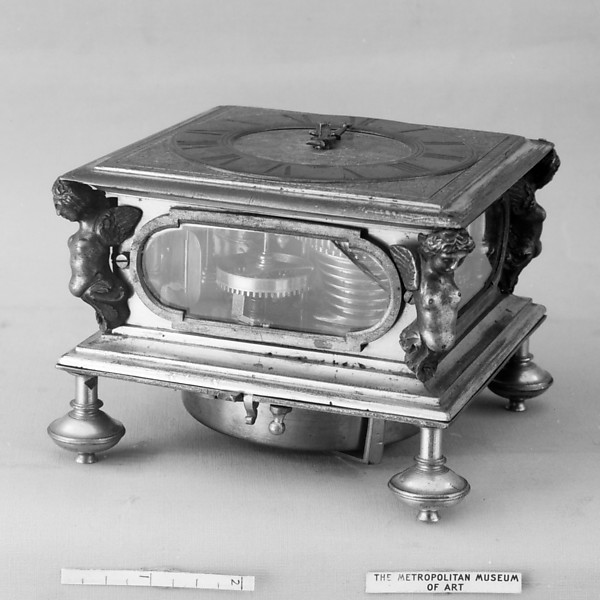
    Table clock, 17th century, Met 00.12.2
    Table clock · 17th century · The Metropolitan Museum of Art, 00.12.2. Public domain. View the source record.

    Catalogue facts

    Object Table clock
    Date 17th century
    Maker / contributors Clockmaker: Daniel Picardi
    Materials Brass gilt, silver, glass, brass, steel
    Dimensions 6 1/2 × 3 1/2 in. (16.5 × 8.9 cm)
    Culture / place Not specified in this record
    Collection number 00.12.2
    Acquisition credit Bequest of Thomas Egleston, 1900

    What to notice in this record

    The catalogue dates the object at century level. This provides a period for comparison, but does not establish a specific year. Any narrower dating for a similar object would need its own supporting evidence.

    The material description includes gilding. Keep the distinction between a surface finish and the material beneath it. A gold-coloured appearance is not a substitute for the source’s specific material description.

    Use it as a comparison

    1. Start with the complete form and the recorded dimensions, then compare individual features.
    2. Transcribe visible names and numbers on your own object exactly, recording their locations.
    3. Separate similarities from differences and mark information that cannot be checked in a photograph.
    4. Follow the museum link for additional views and any revisions before relying on the comparison.

    Questions this entry can—and cannot—answer

    Which object is being described?

    The Met collection object 00.12.2, catalogued as Table clock. The image and facts on this page concern that object.

    Does this identify a similar watch or clock?

    No. It supplies a documented comparison. A proposed identification needs evidence from the object being examined.

    Is a current value or working condition established?

    Neither a current valuation nor a mechanical assessment is supplied by the metadata used for this entry. These points remain unassessed here.

    What should I read next?

    The antique-clock guide explains the broader method. For examination or service, consult an appropriate horology professional.

    Source and image credit

    The Metropolitan Museum of Art — 00.12.2. Metadata consulted 15 October 2026. Bequest of Thomas Egleston, 1900. Public-domain status recorded by The Met. Catalogue facts are separated above from our editorial comparison prompts. Read the editorial method.
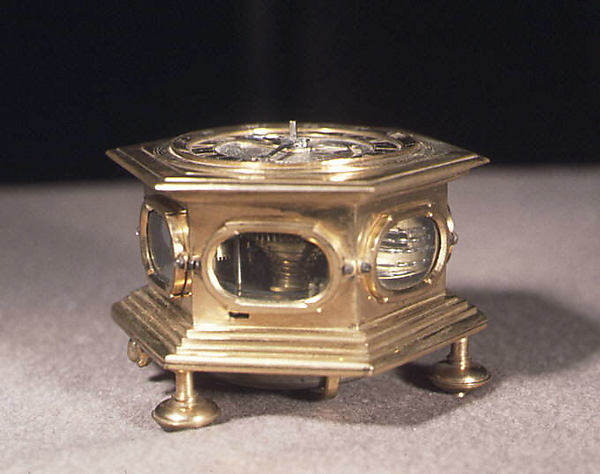
  • Table clock — Maker not recorded · early 17th century

    This table clock in The Metropolitan Museum of Art is dated early 17th century. The catalogue records Brass gilt, silver, glass, brass, steel and identifies the object as 00.12.1. No maker is named in the available catalogue metadata. Use the record as a documented point of comparison: the dates and attributions below belong to this collection object, and should not be transferred to a similar-looking timepiece without further evidence.

    Table clock, early 17th century, Met 00.12.1
    Table clock · early 17th century · The Metropolitan Museum of Art, 00.12.1. Public domain. View the source record.

    Catalogue facts

    Object Table clock
    Date early 17th century
    Maker / contributors Not specified in the available record
    Materials Brass gilt, silver, glass, brass, steel
    Dimensions 5 × 3 1/4 in. (12.7 × 8.3 cm)
    Culture / place Not specified in this record
    Collection number 00.12.1
    Acquisition credit Bequest of Thomas Egleston, 1900

    What to notice in this record

    The catalogue dates the object at century level. This provides a period for comparison, but does not establish a specific year. Any narrower dating for a similar object would need its own supporting evidence.

    The material description includes gilding. Keep the distinction between a surface finish and the material beneath it. A gold-coloured appearance is not a substitute for the source’s specific material description.

    Use it as a comparison

    1. Start with the complete form and the recorded dimensions, then compare individual features.
    2. Transcribe visible names and numbers on your own object exactly, recording their locations.
    3. Separate similarities from differences and mark information that cannot be checked in a photograph.
    4. Follow the museum link for additional views and any revisions before relying on the comparison.

    Questions this entry can—and cannot—answer

    Which object is being described?

    The Met collection object 00.12.1, catalogued as Table clock. The image and facts on this page concern that object.

    Does this identify a similar watch or clock?

    No. It supplies a documented comparison. A proposed identification needs evidence from the object being examined.

    Is a current value or working condition established?

    Neither a current valuation nor a mechanical assessment is supplied by the metadata used for this entry. These points remain unassessed here.

    What should I read next?

    The antique-clock guide explains the broader method. For examination or service, consult an appropriate horology professional.

    Source and image credit

    The Metropolitan Museum of Art — 00.12.1. Metadata consulted 15 October 2026. Bequest of Thomas Egleston, 1900. Public-domain status recorded by The Met. Catalogue facts are separated above from our editorial comparison prompts. Read the editorial method.
  • Tall clock — Case attributed to Thomas Seymour · 1805–10

    This tall clock in The Metropolitan Museum of Art is dated 1805–10. The catalogue records Mahogany, mahogany veneer,
    maple with white pine and identifies the object as 1998.12. Its maker attribution is Case attributed to Thomas Seymour. Use the record as a documented point of comparison: the dates and attributions below belong to this collection object, and should not be transferred to a similar-looking timepiece without further evidence.

    Tall clock, 1805–10, Met 1998.12
    Tall Clock · 1805–10 · The Metropolitan Museum of Art, 1998.12. Public domain. View the source record.

    Catalogue facts

    Object Tall Clock
    Date 1805–10
    Maker / contributors Case attributed to Thomas Seymour; Possibly with John Seymour; Works signed James Doull; Dial possibly painted by John Ritto Penniman
    Materials Mahogany, mahogany veneer,
    maple with white pine
    Dimensions 111 3/4 x 21 1/4 x 9 3/4 in. (283.8 x 54 x 24.8 cm)
    Culture / place American
    Collection number 1998.12
    Acquisition credit Purchase, Anthony W. and Lulu C. Wang Gift, 1998

    What to notice in this record

    The date and maker information are separate catalogue fields. Record both, together with the museum identifier, so a later reader can trace the attribution back to this particular object rather than to a general style.

    The recorded materials include wood. Preserve the named material in your notes and distinguish the case description from the mechanism. Surface colour alone is not a reliable way to transfer that identification to a different object.

    Use it as a comparison

    1. Start with the complete form and the recorded dimensions, then compare individual features.
    2. Transcribe visible names and numbers on your own object exactly, recording their locations.
    3. Separate similarities from differences and mark information that cannot be checked in a photograph.
    4. Follow the museum link for additional views and any revisions before relying on the comparison.

    Questions this entry can—and cannot—answer

    Which object is being described?

    The Met collection object 1998.12, catalogued as Tall Clock. The image and facts on this page concern that object.

    Does this identify a similar watch or clock?

    No. It supplies a documented comparison. A proposed identification needs evidence from the object being examined.

    Is a current value or working condition established?

    Neither a current valuation nor a mechanical assessment is supplied by the metadata used for this entry. These points remain unassessed here.

    What should I read next?

    The antique-clock guide explains the broader method. For examination or service, consult an appropriate horology professional.

    Source and image credit

    The Metropolitan Museum of Art — 1998.12. Metadata consulted 15 October 2026. Purchase, Anthony W. and Lulu C. Wang Gift, 1998. Public-domain status recorded by The Met. Catalogue facts are separated above from our editorial comparison prompts. Read the editorial method.
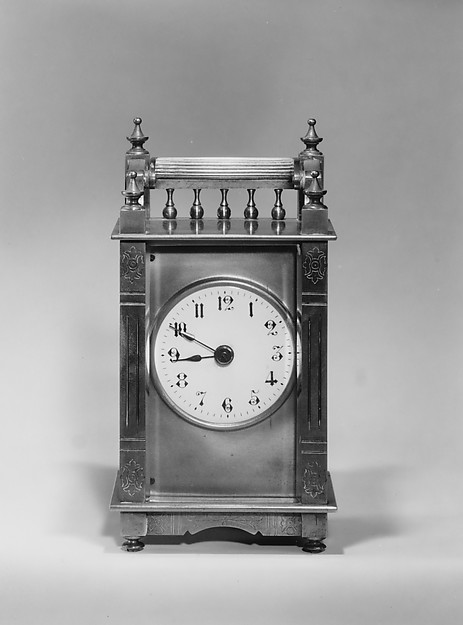
  • Carriage clock — Boston Clock Company · ca. 1890

    This carriage clock in The Metropolitan Museum of Art is dated ca. 1890. The catalogue records Brass, glass, enamel and identifies the object as 1981.434. Its maker attribution is Boston Clock Company. Use the record as a documented point of comparison: the dates and attributions below belong to this collection object, and should not be transferred to a similar-looking timepiece without further evidence.

    Carriage clock, ca. 1890, Met 1981.434
    Carriage Clock · ca. 1890 · The Metropolitan Museum of Art, 1981.434. Public domain. View the source record.

    Catalogue facts

    Object Carriage Clock
    Date ca. 1890
    Maker / contributors Boston Clock Company
    Materials Brass, glass, enamel
    Dimensions 6 1/8 x 3 1/4 x 2 5/8 in. (15.6 x 8.3 x 6.7 cm)
    Culture / place American
    Collection number 1981.434
    Acquisition credit Gift of Mr. and Mrs. H. Ochs, 1981

    What to notice in this record

    The date is qualified rather than exact. Keep that qualification in your research notes: it signals the level of precision supplied by the museum. Do not turn the beginning or end of a range into a documented manufacture year.

    Enamel is included in the material description. When comparing another timepiece, note where enamel is visible and what the record actually specifies. Avoid assuming that every coloured surface uses the same technique.

    Use it as a comparison

    1. Start with the complete form and the recorded dimensions, then compare individual features.
    2. Transcribe visible names and numbers on your own object exactly, recording their locations.
    3. Separate similarities from differences and mark information that cannot be checked in a photograph.
    4. Follow the museum link for additional views and any revisions before relying on the comparison.

    Questions this entry can—and cannot—answer

    Which object is being described?

    The Met collection object 1981.434, catalogued as Carriage Clock. The image and facts on this page concern that object.

    Does this identify a similar watch or clock?

    No. It supplies a documented comparison. A proposed identification needs evidence from the object being examined.

    Is a current value or working condition established?

    Neither a current valuation nor a mechanical assessment is supplied by the metadata used for this entry. These points remain unassessed here.

    What should I read next?

    The antique-clock guide explains the broader method. For examination or service, consult an appropriate horology professional.

    Source and image credit

    The Metropolitan Museum of Art — 1981.434. Metadata consulted 15 October 2026. Gift of Mr. and Mrs. H. Ochs, 1981. Public-domain status recorded by The Met. Catalogue facts are separated above from our editorial comparison prompts. Read the editorial method.
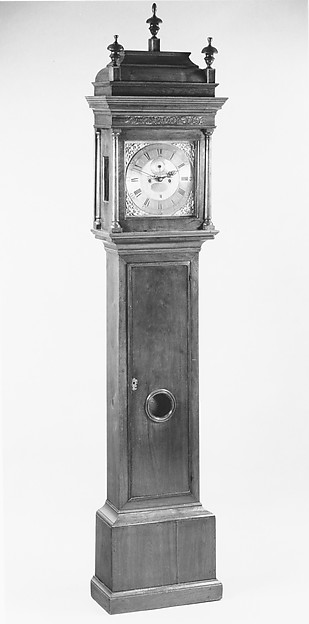
  • Tall clock — Peter Stretch · ca. 1730

    This tall clock in The Metropolitan Museum of Art is dated ca. 1730. The catalogue records Walnut, tulip poplar and identifies the object as 1990.175. Its maker attribution is Peter Stretch. Use the record as a documented point of comparison: the dates and attributions below belong to this collection object, and should not be transferred to a similar-looking timepiece without further evidence.

    Tall clock, ca. 1730, Met 1990.175
    Tall Clock · ca. 1730 · The Metropolitan Museum of Art, 1990.175. Public domain. View the source record.

    Catalogue facts

    Object Tall Clock
    Date ca. 1730
    Maker / contributors Peter Stretch
    Materials Walnut, tulip poplar
    Dimensions 97 x 20 7/8 x 11 1/4 in. (246.4 x 53 x 28.6 cm)
    Culture / place American
    Collection number 1990.175
    Acquisition credit Bequest of Gertrude Schweitzer, 1990

    What to notice in this record

    The date is qualified rather than exact. Keep that qualification in your research notes: it signals the level of precision supplied by the museum. Do not turn the beginning or end of a range into a documented manufacture year.

    The recorded materials include wood. Preserve the named material in your notes and distinguish the case description from the mechanism. Surface colour alone is not a reliable way to transfer that identification to a different object.

    Use it as a comparison

    1. Start with the complete form and the recorded dimensions, then compare individual features.
    2. Transcribe visible names and numbers on your own object exactly, recording their locations.
    3. Separate similarities from differences and mark information that cannot be checked in a photograph.
    4. Follow the museum link for additional views and any revisions before relying on the comparison.

    Questions this entry can—and cannot—answer

    Which object is being described?

    The Met collection object 1990.175, catalogued as Tall Clock. The image and facts on this page concern that object.

    Does this identify a similar watch or clock?

    No. It supplies a documented comparison. A proposed identification needs evidence from the object being examined.

    Is a current value or working condition established?

    Neither a current valuation nor a mechanical assessment is supplied by the metadata used for this entry. These points remain unassessed here.

    What should I read next?

    The antique-clock guide explains the broader method. For examination or service, consult an appropriate horology professional.

    Source and image credit

    The Metropolitan Museum of Art — 1990.175. Metadata consulted 15 October 2026. Bequest of Gertrude Schweitzer, 1990. Public-domain status recorded by The Met. Catalogue facts are separated above from our editorial comparison prompts. Read the editorial method.
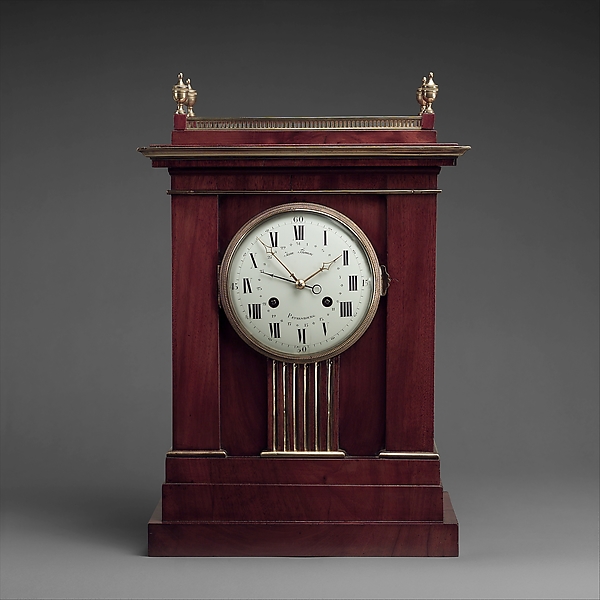
  • Clock — Workshop of David Roentgen · ca. 1780–90

    This clock in The Metropolitan Museum of Art is dated ca. 1780–90. The catalogue records Oak, pine, and mahogany, veneered with mahogany; brass, gilt bronze and enamel and identifies the object as 2002.237. Its maker attribution is Workshop of David Roentgen. Use the record as a documented point of comparison: the dates and attributions below belong to this collection object, and should not be transferred to a similar-looking timepiece without further evidence.

    Clock, ca. 1780–90, Met 2002.237
    Clock · ca. 1780–90 · The Metropolitan Museum of Art, 2002.237. Public domain. View the source record.

    Catalogue facts

    Object Clock
    Date ca. 1780–90
    Maker / contributors Workshop of David Roentgen; Movement attributed to Elie Prudhomme
    Materials Oak, pine, and mahogany, veneered with mahogany; brass, gilt bronze and enamel
    Dimensions Overall: 18 1/4 × 12 1/2 × 8 1/4 in. (46.4 × 31.8 × 21 cm)
    Culture / place Not specified in this record
    Collection number 2002.237
    Acquisition credit Gift of The Ruth Stanton Family Foundation, in honor of Wolfram Koeppe, 2002

    What to notice in this record

    The date is qualified rather than exact. Keep that qualification in your research notes: it signals the level of precision supplied by the museum. Do not turn the beginning or end of a range into a documented manufacture year.

    The material description includes gilding. Keep the distinction between a surface finish and the material beneath it. A gold-coloured appearance is not a substitute for the source’s specific material description.

    Use it as a comparison

    1. Start with the complete form and the recorded dimensions, then compare individual features.
    2. Transcribe visible names and numbers on your own object exactly, recording their locations.
    3. Separate similarities from differences and mark information that cannot be checked in a photograph.
    4. Follow the museum link for additional views and any revisions before relying on the comparison.

    Questions this entry can—and cannot—answer

    Which object is being described?

    The Met collection object 2002.237, catalogued as Clock. The image and facts on this page concern that object.

    Does this identify a similar watch or clock?

    No. It supplies a documented comparison. A proposed identification needs evidence from the object being examined.

    Is a current value or working condition established?

    Neither a current valuation nor a mechanical assessment is supplied by the metadata used for this entry. These points remain unassessed here.

    What should I read next?

    The antique-clock guide explains the broader method. For examination or service, consult an appropriate horology professional.

    Source and image credit

    The Metropolitan Museum of Art — 2002.237. Metadata consulted 15 October 2026. Gift of The Ruth Stanton Family Foundation, in honor of Wolfram Koeppe, 2002. Public-domain status recorded by The Met. Catalogue facts are separated above from our editorial comparison prompts. Read the editorial method.
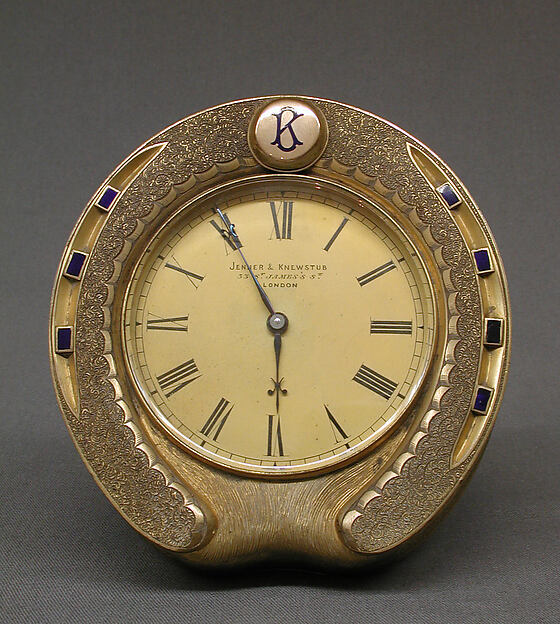
  • Clock — Maker not recorded · late 19th century

    This clock in The Metropolitan Museum of Art is dated late 19th century. The catalogue records Silver and identifies the object as 61.78.18. No maker is named in the available catalogue metadata. Use the record as a documented point of comparison: the dates and attributions below belong to this collection object, and should not be transferred to a similar-looking timepiece without further evidence.

    Clock, late 19th century, Met 61.78.18
    Clock · late 19th century · The Metropolitan Museum of Art, 61.78.18. Public domain. View the source record.

    Catalogue facts

    Object Clock
    Date late 19th century
    Maker / contributors Not specified in the available record
    Materials Silver
    Dimensions Overall: 4 1/2 x 4 3/4 x 1 3/8 in. (11.4 x 12.1 x 3.5 cm)
    Culture / place Not specified in this record
    Collection number 61.78.18
    Acquisition credit Gift of Mrs. Amos L. Beaty, 1961

    What to notice in this record

    The catalogue dates the object at century level. This provides a period for comparison, but does not establish a specific year. Any narrower dating for a similar object would need its own supporting evidence.

    Treat the material list as an object description, not as a repair instruction. It can guide a comparison, but it does not establish how another timepiece was constructed or what treatment would be appropriate.

    Use it as a comparison

    1. Start with the complete form and the recorded dimensions, then compare individual features.
    2. Transcribe visible names and numbers on your own object exactly, recording their locations.
    3. Separate similarities from differences and mark information that cannot be checked in a photograph.
    4. Follow the museum link for additional views and any revisions before relying on the comparison.

    Questions this entry can—and cannot—answer

    Which object is being described?

    The Met collection object 61.78.18, catalogued as Clock. The image and facts on this page concern that object.

    Does this identify a similar watch or clock?

    No. It supplies a documented comparison. A proposed identification needs evidence from the object being examined.

    Is a current value or working condition established?

    Neither a current valuation nor a mechanical assessment is supplied by the metadata used for this entry. These points remain unassessed here.

    What should I read next?

    The antique-clock guide explains the broader method. For examination or service, consult an appropriate horology professional.

    Source and image credit

    The Metropolitan Museum of Art — 61.78.18. Metadata consulted 15 October 2026. Gift of Mrs. Amos L. Beaty, 1961. Public-domain status recorded by The Met. Catalogue facts are separated above from our editorial comparison prompts. Read the editorial method.

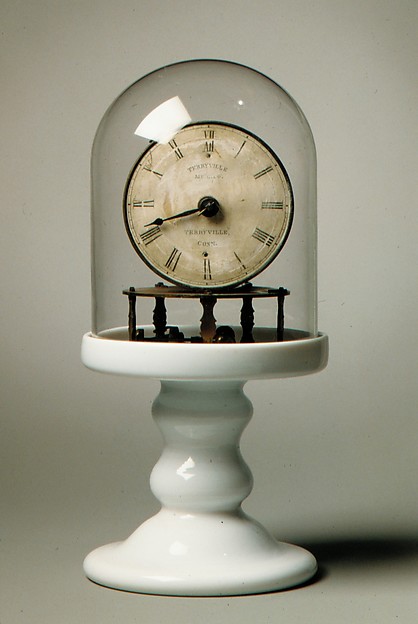
  • Clock — Maker not recorded · ca. 1852

    This clock in The Metropolitan Museum of Art is dated ca. 1852. The catalogue records Brass, free-blown colorless and opaque white glass and identifies the object as 1983.572. No maker is named in the available catalogue metadata. Use the record as a documented point of comparison: the dates and attributions below belong to this collection object, and should not be transferred to a similar-looking timepiece without further evidence.

    Clock, ca. 1852, Met 1983.572
    Clock · ca. 1852 · The Metropolitan Museum of Art, 1983.572. Public domain. View the source record.

    Catalogue facts

    Object Clock
    Date ca. 1852
    Maker / contributors Not specified in the available record
    Materials Brass, free-blown colorless and opaque white glass
    Dimensions H. 10 in. (25.4 cm)
    Culture / place American
    Collection number 1983.572
    Acquisition credit Gift of Mr. and Mrs. Stuart P. Feld, 1983

    What to notice in this record

    The date is qualified rather than exact. Keep that qualification in your research notes: it signals the level of precision supplied by the museum. Do not turn the beginning or end of a range into a documented manufacture year.

    Treat the material list as an object description, not as a repair instruction. It can guide a comparison, but it does not establish how another timepiece was constructed or what treatment would be appropriate.

    Use it as a comparison

    1. Start with the complete form and the recorded dimensions, then compare individual features.
    2. Transcribe visible names and numbers on your own object exactly, recording their locations.
    3. Separate similarities from differences and mark information that cannot be checked in a photograph.
    4. Follow the museum link for additional views and any revisions before relying on the comparison.

    Questions this entry can—and cannot—answer

    Which object is being described?

    The Met collection object 1983.572, catalogued as Clock. The image and facts on this page concern that object.

    Does this identify a similar watch or clock?

    No. It supplies a documented comparison. A proposed identification needs evidence from the object being examined.

    Is a current value or working condition established?

    Neither a current valuation nor a mechanical assessment is supplied by the metadata used for this entry. These points remain unassessed here.

    What should I read next?

    The antique-clock guide explains the broader method. For examination or service, consult an appropriate horology professional.

    Source and image credit

    The Metropolitan Museum of Art — 1983.572. Metadata consulted 15 October 2026. Gift of Mr. and Mrs. Stuart P. Feld, 1983. Public-domain status recorded by The Met. Catalogue facts are separated above from our editorial comparison prompts. Read the editorial method.

  • Clock — Auguste-Emile Rinquet-Leprince · ca. 1860

    This clock in The Metropolitan Museum of Art is dated ca. 1860. The catalogue records Gilt bronze, porcelain and identifies the object as 68.165.9a, b. Its maker attribution is Auguste-Emile Rinquet-Leprince. Use the record as a documented point of comparison: the dates and attributions below belong to this collection object, and should not be transferred to a similar-looking timepiece without further evidence.

    Clock, ca. 1860, Met 68.165.9a, b
    Clock · ca. 1860 · The Metropolitan Museum of Art, 68.165.9a, b. Public domain. View the source record.

    Catalogue facts

    Object Clock
    Date ca. 1860
    Maker / contributors Auguste-Emile Rinquet-Leprince
    Materials Gilt bronze, porcelain
    Dimensions 28 x 13 5/8 x 10 3/8 in. (71.1 x 34.6 x 26.4 cm)
    Culture / place Paris, France
    Collection number 68.165.9a, b
    Acquisition credit Gift of Mrs. Douglas M. Moffat, 1968

    What to notice in this record

    The date is qualified rather than exact. Keep that qualification in your research notes: it signals the level of precision supplied by the museum. Do not turn the beginning or end of a range into a documented manufacture year.

    The material description includes gilding. Keep the distinction between a surface finish and the material beneath it. A gold-coloured appearance is not a substitute for the source’s specific material description.

    Use it as a comparison

    1. Start with the complete form and the recorded dimensions, then compare individual features.
    2. Transcribe visible names and numbers on your own object exactly, recording their locations.
    3. Separate similarities from differences and mark information that cannot be checked in a photograph.
    4. Follow the museum link for additional views and any revisions before relying on the comparison.

    Questions this entry can—and cannot—answer

    Which object is being described?

    The Met collection object 68.165.9a, b, catalogued as Clock. The image and facts on this page concern that object.

    Does this identify a similar watch or clock?

    No. It supplies a documented comparison. A proposed identification needs evidence from the object being examined.

    Is a current value or working condition established?

    Neither a current valuation nor a mechanical assessment is supplied by the metadata used for this entry. These points remain unassessed here.

    What should I read next?

    The antique-clock guide explains the broader method. For examination or service, consult an appropriate horology professional.

    Source and image credit

    The Metropolitan Museum of Art — 68.165.9a, b. Metadata consulted 15 October 2026. Gift of Mrs. Douglas M. Moffat, 1968. Public-domain status recorded by The Met. Catalogue facts are separated above from our editorial comparison prompts. Read the editorial method.

  • Clock — Dubuc · 1815–20

    This clock in The Metropolitan Museum of Art is dated 1815–20. The catalogue records Gilt bronze and identifies the object as 31.41.1. Its maker attribution is Dubuc. Use the record as a documented point of comparison: the dates and attributions below belong to this collection object, and should not be transferred to a similar-looking timepiece without further evidence.

    Clock, 1815–20, Met 31.41.1
    Clock · 1815–20 · The Metropolitan Museum of Art, 31.41.1. Public domain. View the source record.

    Catalogue facts

    Object Clock
    Date 1815–20
    Maker / contributors Dubuc
    Materials Gilt bronze
    Dimensions 19 x 14 1/8 in. (48.3 x 35.9 cm)
    Culture / place Paris, France
    Collection number 31.41.1
    Acquisition credit Bequest of Jane E. Andrews, in memory of her husband, William Loring Andrews, 1930

    What to notice in this record

    The date and maker information are separate catalogue fields. Record both, together with the museum identifier, so a later reader can trace the attribution back to this particular object rather than to a general style.

    The material description includes gilding. Keep the distinction between a surface finish and the material beneath it. A gold-coloured appearance is not a substitute for the source’s specific material description.

    Use it as a comparison

    1. Start with the complete form and the recorded dimensions, then compare individual features.
    2. Transcribe visible names and numbers on your own object exactly, recording their locations.
    3. Separate similarities from differences and mark information that cannot be checked in a photograph.
    4. Follow the museum link for additional views and any revisions before relying on the comparison.

    Questions this entry can—and cannot—answer

    Which object is being described?

    The Met collection object 31.41.1, catalogued as Clock. The image and facts on this page concern that object.

    Does this identify a similar watch or clock?

    No. It supplies a documented comparison. A proposed identification needs evidence from the object being examined.

    Is a current value or working condition established?

    Neither a current valuation nor a mechanical assessment is supplied by the metadata used for this entry. These points remain unassessed here.

    What should I read next?

    The antique-clock guide explains the broader method. For examination or service, consult an appropriate horology professional.

    Source and image credit

    The Metropolitan Museum of Art — 31.41.1. Metadata consulted 15 October 2026. Bequest of Jane E. Andrews, in memory of her husband, William Loring Andrews, 1930. Public-domain status recorded by The Met. Catalogue facts are separated above from our editorial comparison prompts. Read the editorial method.